
The right number lives in your baby's own rhythm, not in a "4 oz per feed" rule. Here's how to find it — and stop guessing.
The first time you hand off a bottle and walk out the door, there's always a version of: will they be ok, and did I pack enough?
The mental load in that moment is real. And the internet does not help.
Why generic advice fails here
Search "how much milk to leave for babysitter," and you'll get a number, usually something like "1.5 oz per hour" or "no more than 4 oz per feed." It's presented as fact, as if it applies to every baby.
The problem is that breastfed babies don't read those articles - those chickpeas 💜 Some drink more, some drink less, some cluster feed, some space things out, some change their entire pattern the week you go back to work (because of course they do), some even refuse to drink or eat if you are not around (topic for another one!).
A flat number applied to a specific baby with a specific rhythm is just a guess with better PR.
The actual answer: your baby already has a pattern
The right amount is a function of how your baby feeds: how often, how much per session, and how that shifts across the day, where, and with whom.
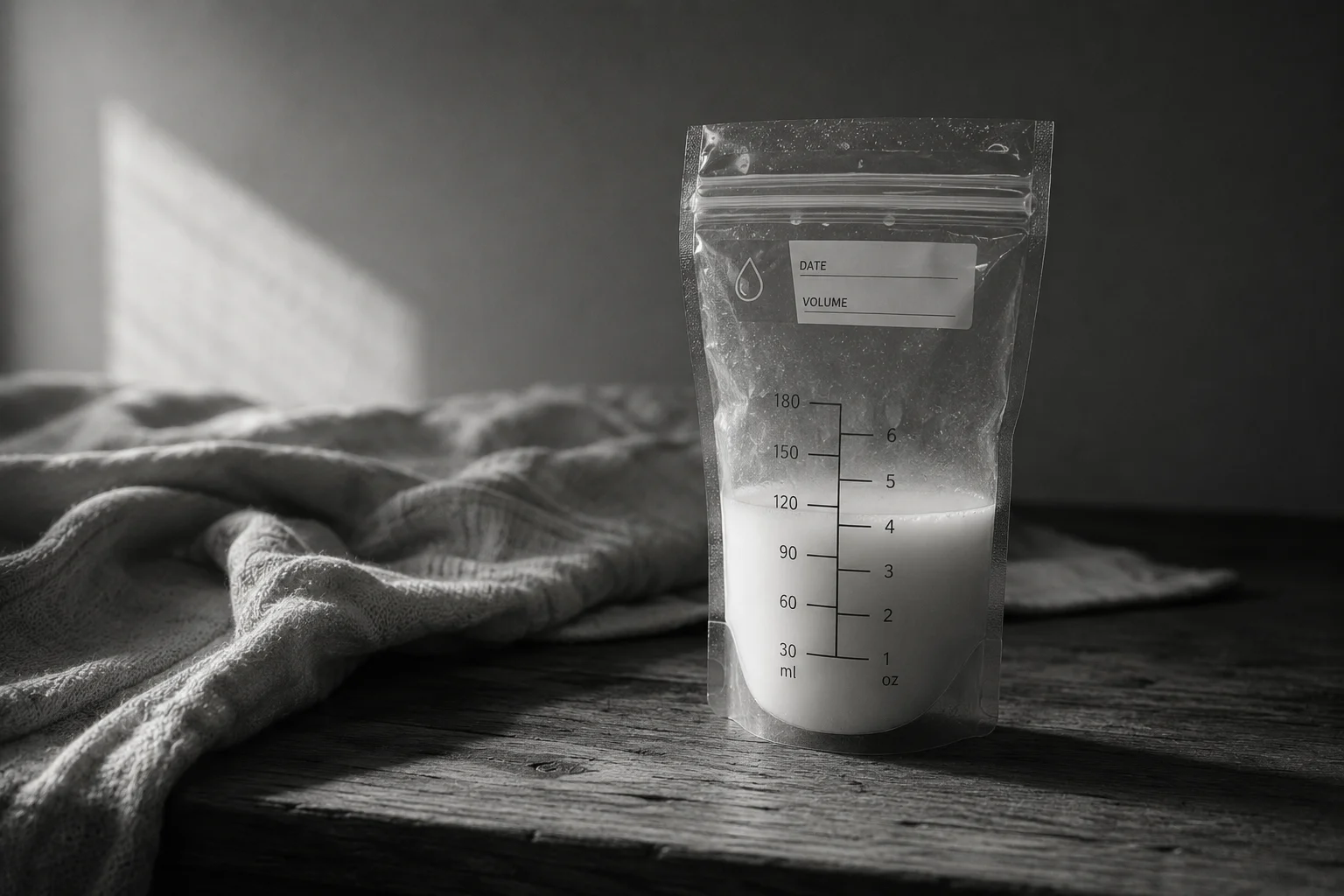
That pattern exists, and it evolves — the week you go back to work rarely looks like the week before.
What this means practically
Before your next handoff, ask yourself: what does a typical feed look like for my baby right now, at this stage? Right now, in this context — not three weeks ago, not what the internet calls average — that's your starting point. Add a small buffer for uncertainty, because caregivers aren't you, and babies can feed differently in new environments. Then let it go (or, at least, try to). The goal is enough confidence that you're not checking your phone every 20 minutes.
Less chaos on the messy mornings
We help you read your pumping pattern clearly — and tell you when and how much to pump, so when moments like this come up, you're not guessing anymore. Less math in your head. That's the job.
Less chaos, more chill. 💜
Your baby's pattern already holds the number — we just help you read it before the next handoff.